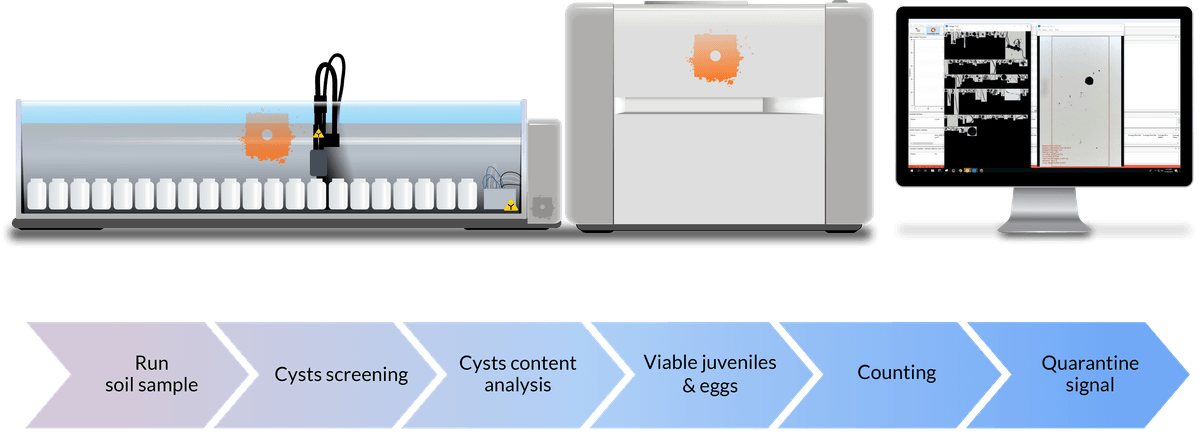
This technology helps farmers and laboratories detect cyst nematode threats faster by using high-speed imaging to capture eggs and larvae in exceptional detail. Automated identification and high-throughput analysis reduce manual effort and deliver accurate results sooner, allowing confident, data-driven decisions when timing is critical. For laboratories, this means higher sample throughput, greater consistency, and reduced labor costs. This enables them to provide faster, more reliable insights to farmers. The result is smarter crop selection and rotation, improved soil health, and stronger protection of yields, delivering clear value across the entire agricultural decision chain.
Why?
PCN can silently cut potato yields by up to 80%, so testing prevents large hidden losses and shows whether a field is still economic for potatoes by quantifying egg and cyst levels in soil. Because PCN are quarantine pests, regular testing is often mandatory to certify seed lots and maintain access to export markets, while a positive result can block seed production if unmanaged.
Since cysts can survive 20–30 years, one bad decision becomes a multi decade problem, so testing is essential for planning rotations, deciding when to take fields or patches out of potato, choosing resistant or tolerant varieties, and determining if nematicides are justified. Mapping PCN levels also enables targeted management rather than blanket treatments and supports better machinery hygiene to limit spread, which in turn reduces long term regional economic damage from this pest.
Cookie Use
We use cookies to ensure a smooth browsing experience. By continuing we assume you accept the use of cookies.